Getting your congregation to actually see your communications is harder than it sounds.
Facebook reach for Pages has dropped to 2–5% of followers, and most business pages sit closer to the low end of that range (Caffeinated Church, 2026). If your church has 300 Facebook followers and sends an event update, roughly 6–15 people see it. Your Sunday bulletin gets left on the seat. Email newsletters land in promotions folders.
A push notification to a phone that’s already in someone’s pocket works differently. And for small Australian churches trying to keep 100–500 members genuinely connected, a church engagement app is one of the more practical tools available.
This guide walks through what that looks like in a real week, not in a product brochure.
What “church engagement” actually means in practice
Engagement is a vague word. For a small church, it usually means three concrete things: people know what’s on, they show up, and they feel connected between Sundays.
A church engagement app addresses all three, but the way it does it matters. The difference between a useful tool and an unused one comes down to how well it fits into the existing rhythm of your week, not how many features it has.
Consider a typical week for a church administrator at a 200-member Baptist congregation in Queensland. Monday is quiet. Tuesday, they confirm the guest speaker for Sunday. Wednesday, the weekly Bible study changes venue. Thursday, the missions team wants to share a prayer request. Friday, someone asks whether online giving is available for those who missed the offering.
Without a direct communication channel, each of those moments means a Facebook post that half the congregation won’t see, an email that half won’t open, or a WhatsApp group that only reaches the people already in the loop.
With a church engagement app, each moment becomes a 30-second push notification sent from a dashboard to every member who has the app installed.
Push notifications: the one feature that changes the week
Push notifications are the highest-value feature in any church engagement app, and they’re straightforward to use.
When the venue for Wednesday Bible study changes, you open the app dashboard, type a short message, and tap send. Members with the app on their phones get a notification within seconds, regardless of whether they’re following your Facebook page or subscribed to your email list.
The comparison with other channels is concrete. According to research from Caffeinated Church (2026), Facebook Groups retain 20–40% organic reach, but even that depends on members actively being in the group. Push notifications reach everyone who has opted in when they install the app, no algorithm involved.
For time-sensitive updates, nothing else comes close.
This matters most for moments like:
- A last-minute change to Sunday’s service order
- An urgent prayer request from a ministry team
- A reminder that online giving closes at midnight for the quarter
- A holiday service time that differs from the regular schedule
None of these require a marketing strategy. They just need a direct line to your congregation’s pocket.
Events and RSVP: less admin, better attendance
One of the consistent headaches in small church administration is events. Not running them, but communicating them, tracking who’s coming, and following up.
A church app with an events calendar and RSVP function moves this off spreadsheets and Facebook comment threads.
The practical flow: you add the event once in the app dashboard (title, date, time, location, a short description), send a push notification to announce it, and the app handles RSVPs. Members tap to register interest; you see the count in your dashboard.
For bigger moments like Easter services, camps, or community outreach days, this gives you a realistic attendance estimate before the day. For smaller recurring events like youth group or women’s Bible study, it removes the need to manage a separate sign-up sheet.
The 2026 Pushpay and Barna State of Church Technology report found that 79% of church leaders say technology helps congregations feel more connected. Events and RSVP capability is a significant part of that, because it gives members a clear, low-friction way to participate.
Sermons, giving, and prayer: keeping the week alive
Sunday is the high point of the week for most churches. The challenge is the six days either side of it.
A church engagement app extends the reach of Sunday into the rest of the week in a few ways.
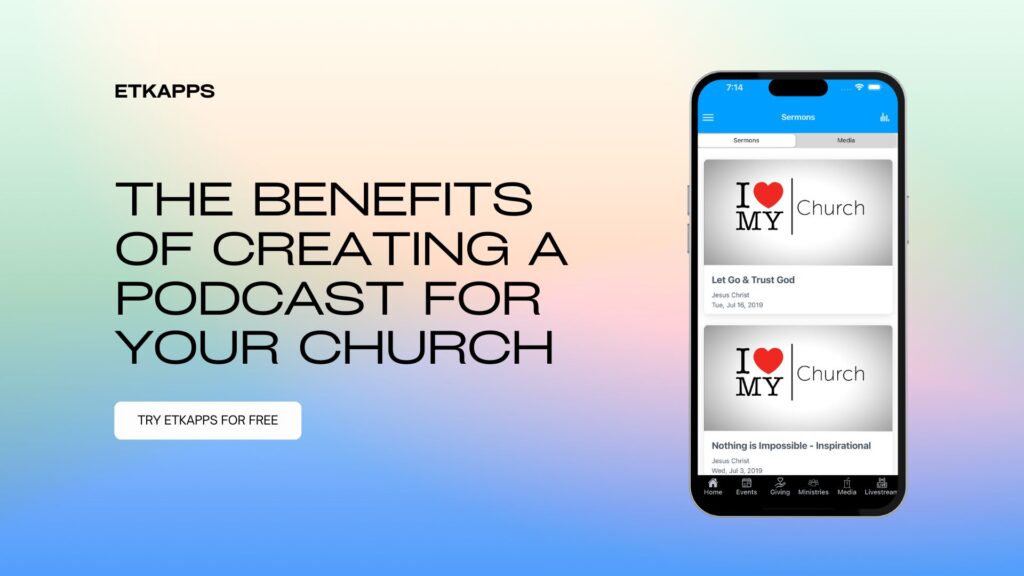
Sermon archive. Members who missed Sunday, who want to revisit a message, or who want to share it with a friend can access it directly in the app. For a pastor who puts serious work into their sermons, having those messages accessible on-demand rather than lost after one viewing is worth something.
Online giving. Digital giving through a church app removes friction for members who don’t carry cash or who simply forgot to give on Sunday. Stripe integration means the transaction is standard and secure. For churches that have historically relied on the plate, this alone can meaningfully increase giving consistency.
Prayer requests. A prayer request feature lets members submit requests directly through the app, where leadership can see and respond to them. This keeps pastoral care visible and connected even when the clergy schedule is stretched, which matters given that clergy shortages continue to affect Australian churches across multiple denominations (Ian Duncum, 2026).
What a week actually looks like with the app running
To make this concrete, here is a realistic week for a church administrator using a church engagement app:
Monday. Check the app dashboard. Two new prayer requests came in over the weekend. Forward them to the pastoral care team.
Tuesday. Add next Sunday’s service to the events calendar. The guest speaker’s name and bio go in the description. Send a push notification: “Join us Sunday 10am, guest speaker confirmed.”
Wednesday. Bible study venue changes at short notice. Push notification sent in under a minute. Members are notified before they’ve left for the original location.
Thursday. The missions team shares a praise report. Post it to the app’s social feed. Push notification optional.
Friday. End-of-month giving reminder. One push notification, written in two sentences.
Saturday. Check RSVPs for Sunday’s service. Share the count with the welcome team so they know how many seats to set up.
Sunday. The service runs. Sermon audio is uploaded to the archive by Sunday afternoon.
Total admin time across the week: around 30–40 minutes, spread across small tasks. No extra platform to manage. No algorithm to second-guess.
What to look for in a church engagement app
If you’re evaluating software to increase church engagement, a few things are worth checking before you commit:
All the features you need in one price. Some platforms charge separately for push notifications, giving, and events. Look for transparent, all-in pricing so you know exactly what you’re paying each month.
Australian support. If something breaks on a Saturday afternoon before your Sunday service, you want someone in your timezone who can help. US-built platforms with US support hours are not the same as locally-supported tools.
Simple enough for a volunteer to use. The church administrator at a 200-member church is often not a technology professional, and sometimes they’re a volunteer. The dashboard needs to be usable without training.
No long contracts. Month-to-month means you can move on if it stops working. Annual contracts with early termination penalties (common with larger US platforms) are unnecessary for a small Australian church.
Frequently asked questions
What does a church engagement app actually do?
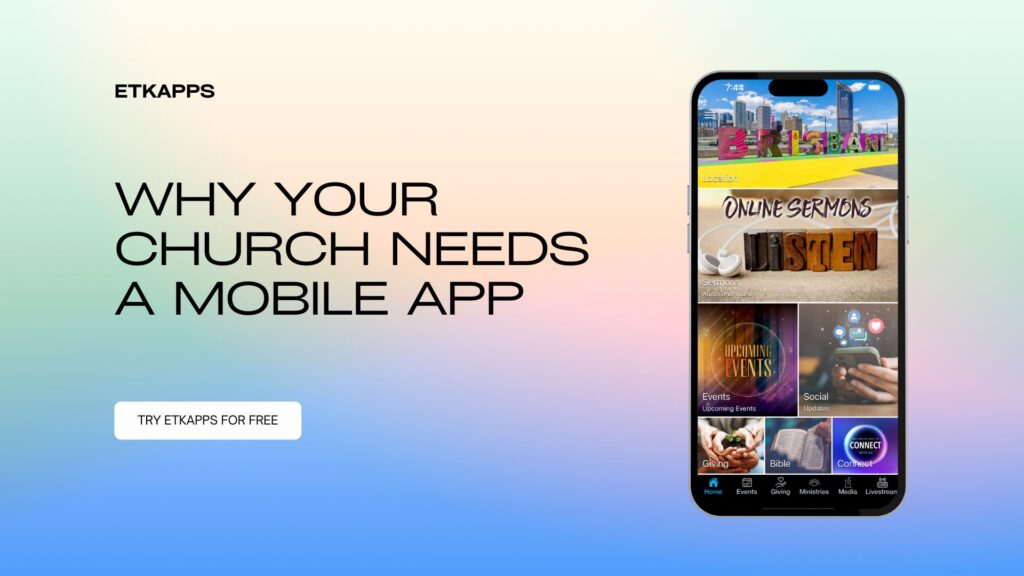
A church engagement app gives your congregation a single place to receive push notifications, view events, access sermons, give online, and submit prayer requests. For the administrator, it provides a dashboard to manage all of that in one place, without needing separate tools for each function.
Is a church app worth it for a small congregation?
For churches with 100 or more active members, yes. The time saved on communications alone (fewer missed events, fewer repeat announcements, fewer last-minute scrambles) usually exceeds the monthly cost. For very small congregations of under 50 members, a group chat might be sufficient.
How is a church app different from just using Facebook?
Facebook’s organic reach for Pages is now 2–5% of followers on average (Caffeinated Church, 2026). A push notification from your church app reaches everyone who has opted in. You also own the channel: no algorithm changes, no policy updates, no risk of the platform deprioritising your content.
If you want to see what a church engagement app looks like for your specific congregation, ETKApps offers a 30-day guided preview at no cost, with no credit card required. Add your church here and we’ll set up a configured preview for you to explore.